Microsoft has discontinued support for Internet Explorer, which means it doesn't use modern web technologies, and some pages won't display correctly.
We recommend using Google Chrome for the best viewing experience.

Territories Categories: Asia

Diya Mehra is a Senior Assistant Professor in the Department of Sociology at South Asian University, New Delhi. Trained as a cultural anthropologist, her research focuses on the historical and contemporary urbanization of metropolitan cities in India, metropolitan urban governance, the contemporary urbanisation of small Indian towns and their rural hinterlands, particularly in mountain environments, and […]

Image - RSA Default Logo

Lingnan University is one of the eight publicly funded institutions in the Hong Kong Special Administrative Region (HKSAR) of the People’s Republic of China (PRC) and has the longest established tradition among the local institutions of higher education. It is widely recognised for providing quality education with a focus on whole-person development and conducting high-impact […]

The notion of ‘region,’ as interpreted by planners and policymakers, is frequently administrative and formal, delineated by jurisdictional boundaries and quantified through statistical metrics such as population density, GDP, and land-use classifications (Swami & Hemrajani, 2023; Choudhary, 2021). However, for many communities in the Thar Desert of western Rajasthan- such as the Jogis, Lohars, Bhils, […]

Around one-quarter of the world’s labour force works in agriculture. In many low- to middle-income countries, labour in agriculture is one of the highest contributors. As WOTR notes in its article, women are often engaged in agricultural activities, but their work remains invisible. Stokes and Ghosh argue that this invisibility is best understood through the […]

Watch as Lavanya Gupta, RSA Blog Editor, presents the 2025 RSA Best Blog Award to Ayush Srivastava and Asma Sayyad, both of the Tata Institute of Social Sciences, India, for their blog entitled Tide and Territory: Vernacular Regionality in Maharashtra’s Koli Fishing Communities.

The Association of South-East Asian Nations adopted a master plan in 2016, which aimed at increasing connectivity by 2025. The Master Plan (MPAC 2025) focuses on physical, institutional and people-to-people connectivity. This connectivity needs to be achieved by focusing on developing key areas such as sustainable infrastructure, digital innovation, people’s mobility, logistics and regulatory practices. […]

The 2025 Annual Conference of the Regional Studies Association (RSA) China Division was successfully held at the College of Earth Sciences, Zhejiang University, Hangzhou, between 19–21 September 2025. The conference brought together over 180 scholars from more than 80 leading universities and institutes worldwide, including Peking University, Tsinghua University, Wuhan University, Shanghai Jiao Tong University, […]

On 9th September 2025, Manipal University Jaipur (MUJ), Rajasthan, India, hosted a guest lecture and workshop titled “From Blogs to Papers: Building Skills for Ethical and Engaged Writing.” The session was delivered by Ms Lavanya Gupta, Blog Editor at the Regional Studies Association (RSA), and drew over 65 participants, including undergraduates, master’s students, PhD scholars, […]

For centuries, Mumbai’s Koli fishing communities have sustained a way of life shaped by the tides, their Koliwadas (कोळीवाडा, Marathi for hamlet of the Kolis) functioning as self-contained maritime regions with distinct cultural, linguistic, and economic rhythms. These settlements, which are now under pressure from coastal reclamation and urban expansion, illustrate both their deep historical […]

The concept of Quyu (区域) in China Across policy and academic debates, regions are increasingly recognised as key arenas for addressing climate change, demographic shifts, and economic transitions. In Western contexts, they are often conceptualised as functional economic spaces shaped by inter-firm trade, labour mobility, supply-chain integration, or as outcomes of local agency where regional […]

Development History: A Multi-Dimensional Region Centred on Shanghai In the Chinese context, as urban spatial patterns and governance systems evolve, the concept of “region” increasingly exhibits multi-dimensional and dynamic characteristics, especially prominent in Shanghai and its surrounding areas. Shanghai is one of China’s four municipalities directly under the central government and a core city of […]

The Regional Studies Association invites contributions for a special issue of our blog focused on Asian Perspectives on Regional Development. This initiative seeks to explore how regions are conceptualized, governed, and experienced across diverse Asian contexts through place-based terminologies and frameworks. This special issue aims to uncover the rich tapestry of regional concepts embedded in […]

Prof. Liu graduated from the National University of Singapore and has been with the School of Tourism Management at Sun Yat-sen University since 2013. Currently, he been serving as the Assistant Dean of the School and is titled as the Yat-sen Pioneer Scholar. His diverse research areas encompass regional studies, globalisation, industrial upgrading, and AI/big […]

Prof. Liu graduated from the National University of Singapore and has been with the School of Tourism Management at Sun Yat-sen University since 2013. Currently, he been serving as the Assistant Dean of the School and is titled as the Yat-sen Pioneer Scholar. His diverse research areas encompass regional studies, globalisation, industrial upgrading, and AI/big […]

Kantha, a traditional embroidered quilt from Bengal (now divided between Bangladesh and West Bengal, India), historically represented women’s domestic artistry through distinctive running stitches and colored motifs on layered muslin garments. There is a growing demand for commercial Kantha textiles in conditions of the ‘market,’ driven primarily by NGO setups (Modak, 2021). These ‘marketable Kanthas‘ […]

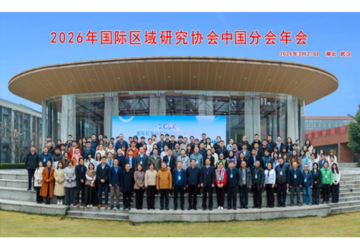
The recent RSA China Division Annual Conference was a great success, with over 240 scholars from more than 80 prestigious Chinese universities participating. The conference featured 19 parallel sessions and six keynote speeches delivered by renowned scholars, including Fulong Wu and Canfei He. Zhouying Song gave a presentation introducing RSA and played a video message […]

I recently read an article on the SDG goal of zero hunger among nations. It made me realize that after the pandemic, people were able to have control over their consumption to ensure that everyone in the family was fed correctly. It can be challenging for those from a less privileged community to fairly divide […]

Lavanya is a rural geographer and PhD scholar at Tata Institute of Social Sciences, India, where she examines the intersections of innovation, entrepreneurship, and community development in the Himalayan region. Her doctoral research in Munsiyari, Kumaon, explores how cultural entrepreneurship initiatives catalyze rural regeneration. Her previous works investigated pathways for rebuilding rural spaces with women’s […]

Lavanya is a rural geographer and PhD scholar at Tata Institute of Social Sciences, India, where she examines the intersections of innovation, entrepreneurship, and community development in the Himalayan region. Her doctoral research in Munsiyari, Kumaon, explores how cultural entrepreneurship initiatives catalyze rural regeneration. Her previous works investigated pathways for rebuilding rural spaces with women’s […]

We would like to welcome Mengdi Wang as the new Secretary of the RSA China Division. Dr. Mengdi Wang graduated with a BSc in Geographical Science from Wuhan University and earned her PhD in Human Geography from the Institute of Geographical Sciences and Natural Resources Research (IGSNRR) at the Chinese Academy of Sciences. Her research focuses […]

This blog was written for the RSA Blog Student Summer Series that will highlight graduate student success in regional studies across the globe throughout the summer.    We have witnessed many instances of migration and displacement due to conflicts, violence or genocide in the modern world. It has caused much harm to lives, property and […]

We use cookies to improve your website experience. To learn about our use of cookies and how you can manage your cookie settings, please see our Cookie Policy. By closing this message, you are consenting to our use of cookies.