In 2008, something cracked in China’s growth model. The global financial crisis hit export-oriented manufacturing hard: factories slowed, orders collapsed, and millions of migrant workers suddenly found themselves without work. For rural migrants, the city had always been a conditional space — a place of labour, but rarely of secure belonging. Without stable employment, many lost not only income, but also housing, welfare access, and the fragile possibility of remaining in urban life. For many, the only option was to return to the village.
Yet return did not mean going back unchanged. Those who came back carried with them skills, habits, and forms of knowledge acquired in the factories, markets, and workshops of the coastal economy. Their return coincided with a broader reorientation of Chinese development after 2008, as the state sought to compensate for shrinking global demand by stimulating domestic consumption, including in rural areas. It is within this conjuncture that Taobao Villages began to emerge: rural settlements transformed by ecommerce, logistics, and platform-mediated trade. Rather than treating these villages as virtuous models of rural development, this article approaches them as heterogeneous and contested socio-spatial formations through which globalisation materialises from below (Leoni, 2024; Choplin and Pliez, 2015).
This proposal examines Taobao Villages as a spatial outcome of crisis, counter-migration, and platform expansion. Rather than seeing them merely as examples of digital inclusion or entrepreneurial success, I read them as sites where logistics and platform practices reorganise rural inhabitation itself. In this sense, they help rethink the countryside beyond inherited urban-rural binaries, foregrounding it as an active terrain of transformation rather than a residual backdrop to urbanisation (Wang, Maye and Woods, 2023). They also point to a broader process of reinvention, in which rural labour, domestic space, and everyday life are reassembled through digital infrastructures and returning labour (Leoni, 2024; Zhang, 2023).
Countermigration is central to this story. The return of migrant workers did not mark the end of mobility, but its reterritorialisation. Through countermigration, mobility folded back into the village, where people themselves became crucial infrastructures of coordination, trust, and adaptation. Returnees sustained new forms of rural economic life through everyday practices of connection, cooperation, and logistical improvisation, making platform commerce workable even where formal infrastructures remained partial or uneven (Simone, 2004). At the same time, they did not simply resume an older rural life; they recomposed village space through skills, aspirations, and social relations shaped by migration and urban labour (Zhang, 2023). Village houses became shops, warehouses, and dispatch points; kinship ties became logistical networks. Infrastructure, in this context, is not only technical but also social, embodied, and activated through countermigration.
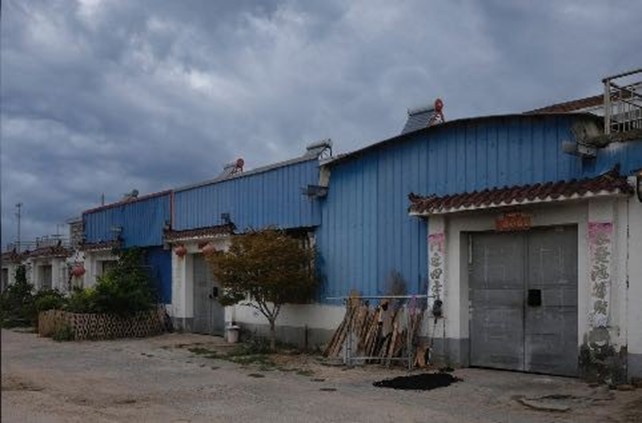
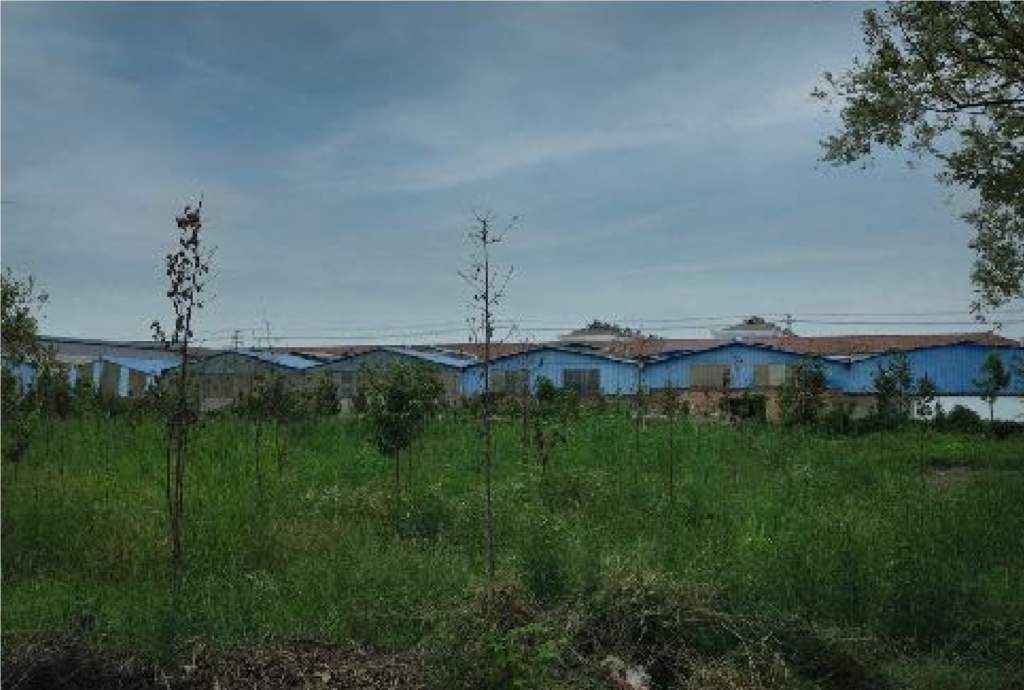
Presenting the case of Dongfengcun, the piece argues that Taobao Villages exemplify a process of recursive mobilization, through which capital, labour, goods, knowledge, and technologies return to the countryside in transformed ways after the 2008 financial crisis. Rural China thus emerges not as a passive or residual space, but as a key terrain where platformisation, logistics, and countermigration reorganise flows, circulation, and settlement. Mobility, in this sense, is not only movement between places, but the uneven remaking of place through return, infrastructural adaptation, and everyday practices of negotiation.
Connect with the Author

Sofia Leoni is an architect and holds a Ph.D. in Urban and Regional Development from the Politecnico di Torino, and has been a member of the China Room research group since 2022. She holds both a Master of Architecture (M.Arch.) and a Bachelor of Architecture (B.Arch.) from Politecnico di Torino, as well as a second M.Arch. from Tsinghua University in Beijing. She has been a visiting scholar at Shenzhen University and a research fellow at Brown University, Rhode Island. Her doctoral dissertation deals with the emergence of platform economies in rural China and interrogates the granular and ordinary transformations this phenomenon has generated, from new forms of labor to new socio-spatial ecologies and everyday infrastructures.
 : Sofia Leoni
  : 0000-0002-3002-4252
  : chinaroom_polito : spacepoint