The importance of ports in the elaborate systems that enable the global mobility of goods has been a critical focus for nation-states and for globalised business interests. As a result, port development schemes, such as those linked to the China-led Belt and Road Initiative, have contributed to the rise in container volumes handled by ports globally from around 500 million in 2010 to well over 800 million in 2023. These infrastructure developments have been important in supporting ongoing reconfigurations of global capitalism (Danyluk, 2021), including the shift of much global manufacturing production to Asia, creating profound impacts in the territories where they are developed and operate (Silver & Wiig, 2023). Unsurprisingly, conflicts in and around ports have been widely reported as a feature of growing port development pressures (Apostolopoulou, 2024; Savoldi, 2024).
In response to these tensions, a growing body of literature has argued for shifts in port and port-surrounding governance approaches to reduce conflicts and secure wider community and sustainability benefits in port cities (Notteboom & Haralambides, 2022). Merk (2013) refers to this as a “fundamental prerequisite of a successful port.” For Jacobs and Lagendijk (2014), these approaches can support a context “where players seek to secure their dependencies”. Jansen and Hein (2023) argue that these governance innovations are important beyond the narrow features of a commercial port and make a case for an approach informed by the notion of “symbiosis”, whereby the mutual dependencies, including those related to the environment, are nurtured.
The Port of Durban (PoD), located adjacent to the Durban city centre and managed by the state transport company, Transnet, was for many years the southern hemisphere’s largest container port. After South Africa’s 1994 democratic elections, considerable national attention was paid to increases in the PoD’s capacity. By the late 2000s, Transnet was emboldened by its earlier successes and proposed increasing PoD’s container capacity to 7 million containers by 2020.
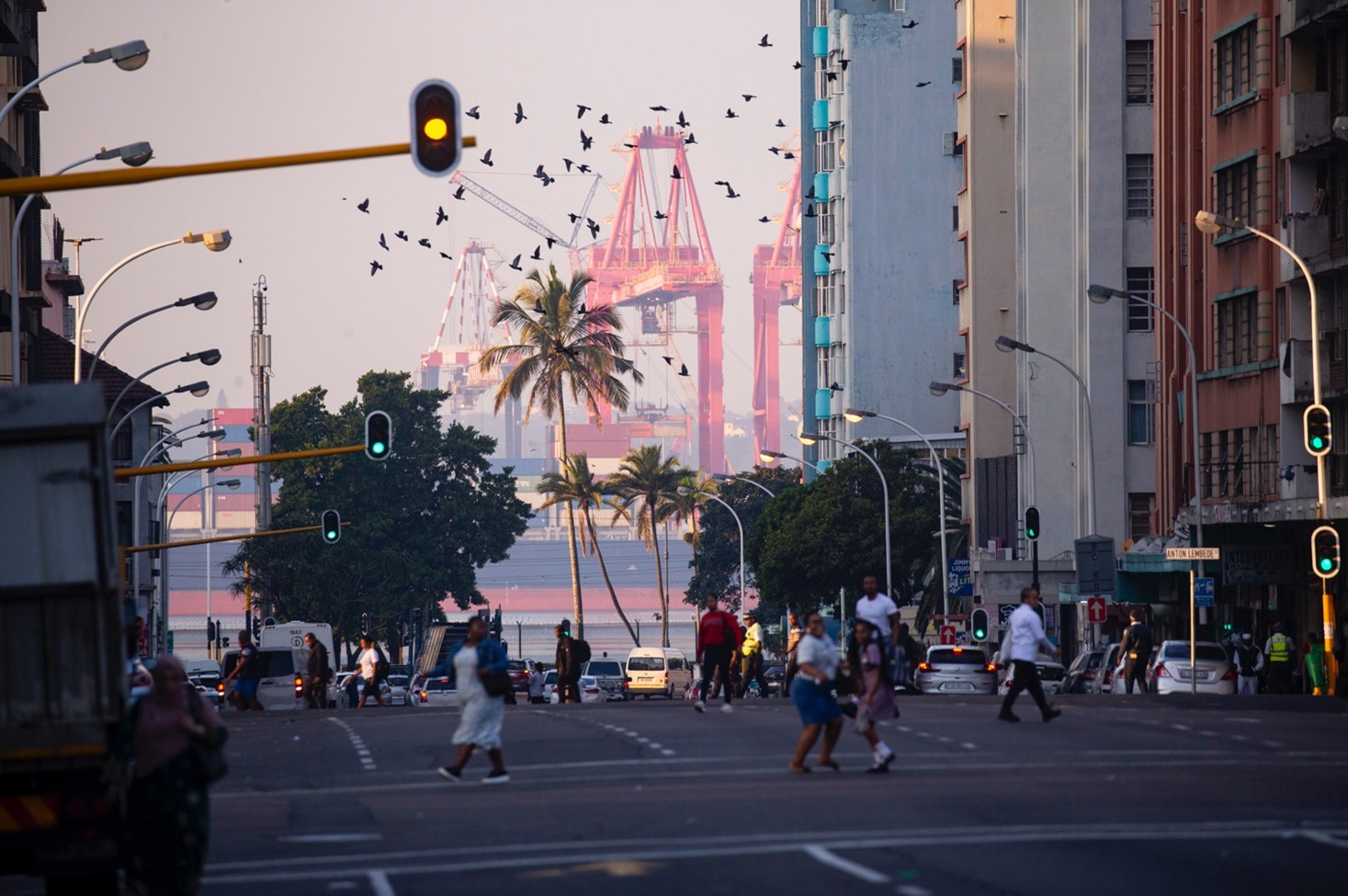
However, despite these intentions, during the 2010s, actual containers handled only showed modest growth, from 2,55 million in 2010 to 2,77 million in 2019
Alongside failures to scale up the port’s container capacity, the PoD’s efficiency was ranked last among 403 container ports worldwide by 2023. Densely developed urban areas around the city-centre port also became increasingly inundated with freight vehicles, unauthorised land-use, and general urban decay (Martel & Sutherland, 2018). Communities frequently protested about these matters, with criticisms directed at both Transnet and the eThekwini Municipality (Mpungose & Maharaj, 2022). During this period, a variety of studies also documented the near ecological collapse of the Bay of Durban. To most stakeholders, Transnet and the national government seemed disinterested in the issues they raised, a situation made worse by frequent changes in port personnel and the highly centralised structures of Transnet.
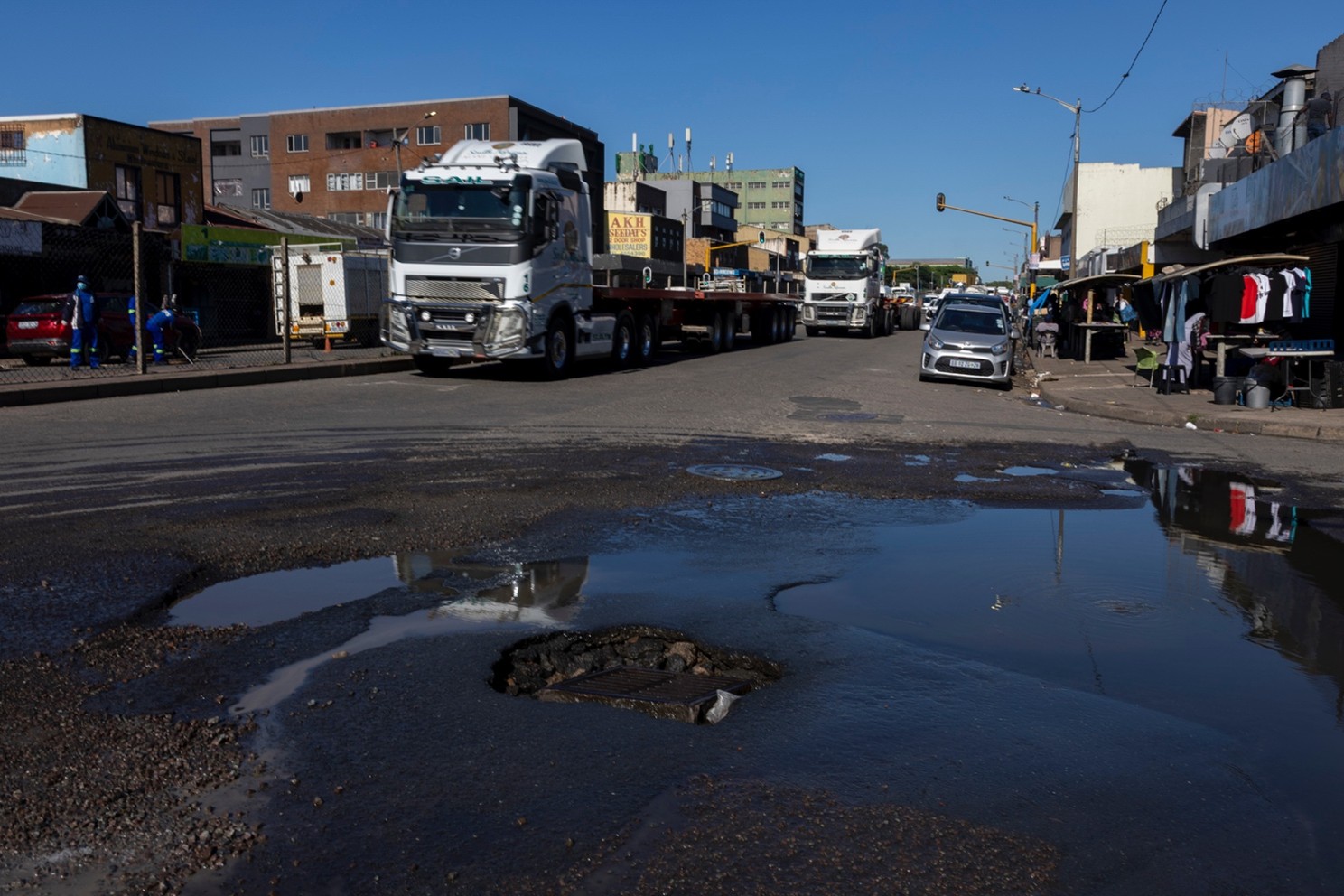
These experiences, in and around the Port of Durban, confirmed how dirigiste-type development choices made by Transnet served to generate forms of local exclusion and contributed to negative material changes in the quality of the urban environment. Particularly interesting in this context is that the impacts of the state’s approach had profound impacts, not just on local communities and businesses, but also on weakening the commercial standing of the Port. This highlights how important recognition of mutual dependencies and the move towards more inclusive governance arrangements can be, not just for elevating issues raised by a wide array of stakeholders in and around a port, but also for a port’s commercial success.
Connect with the Author

Glen Robbins is currently a Visiting Researcher in the Southern Centre for Inequality Studies (University of the Witwatersrand) and Research Associate at PRISM (University of Cape Town). He has previously been a senior official in the city’s local government and has also worked extensively as an advisor to governments, multi-lateral organisations and the non-government sector. Prior to his current associations, he was an Honorary Research Fellow at the University of KwaZulu-Natal. He is working towards a late-career PhD at the University of Amsterdam.
 : Glen Robbins
  :
: