The notion of ‘region,’ as interpreted by planners and policymakers, is frequently administrative and formal, delineated by jurisdictional boundaries and quantified through statistical metrics such as population density, GDP, and land-use classifications (Swami & Hemrajani, 2023; Choudhary, 2021). However, for many communities in the Thar Desert of western Rajasthan- such as the Jogis, Lohars, Bhils, Langas, and Gujjars– the region is experienced not through maps or government plans but through dynamics of mobility, access to water, kinship ties, caste networks, and seasonal adaptations (Kumar et al., 2017). In these arid margins, everyday vernacular concepts like Dhani (A small group of households situated within a village), dera (temporary settlement), and Gochar (Community pastureland) shape the lived experience of the region in ways that challenge rigid classifications.
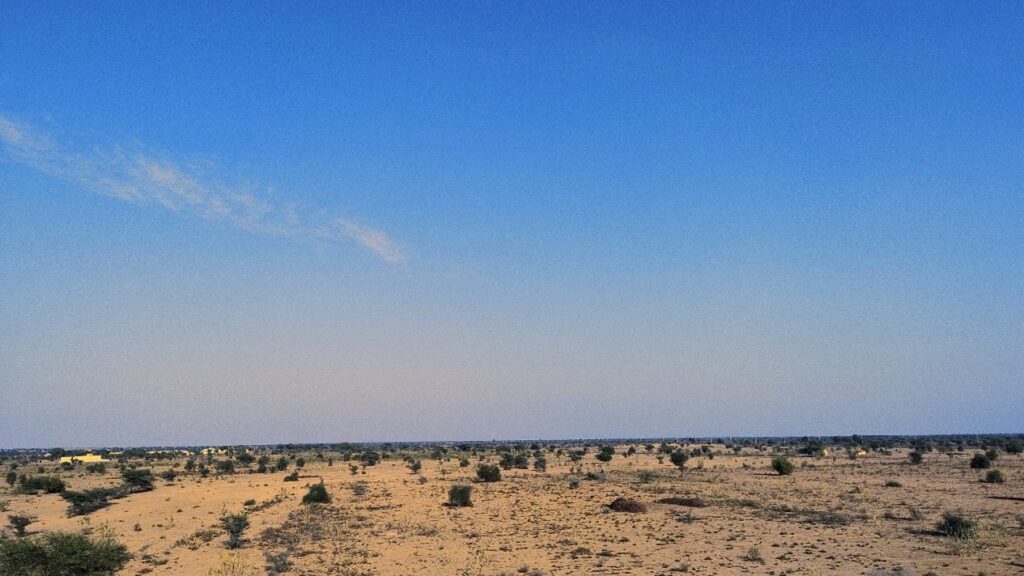
This blog explores how marginalised and mobile communities conceptualise and engage with the notion of “region” from a grassroots perspective. Rather than viewing the marginalised and mobile communities conceptualize themselves as mere recipients of development, these communities act as active stewards and navigators of fragile ecologies and social systems. Drawing on three months of ethnographic research conducted in three villages of the Thar Desert in Rajasthan, India, which included semi-structured interviews, participant observation, and focus group discussions, I reflect on how these communities understand their roles amid a changing climate and an evolving policy landscape.
Dhani, Dera, and the Fluidity of Vernacular Space
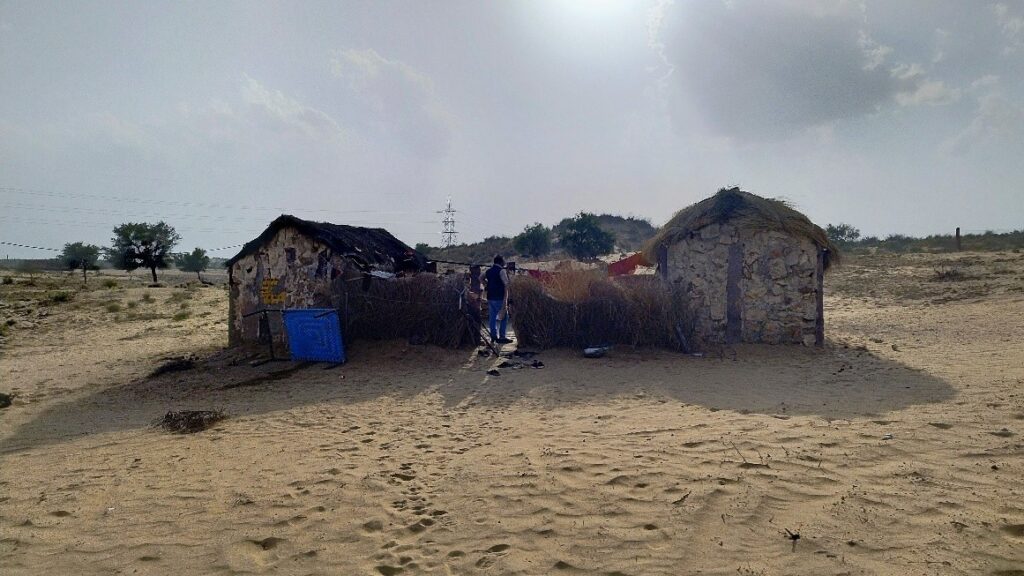
In the hinterland of the Thar Desert, the dhani– a cluster of 2 to 5 houses- remains the primary spatial unit for numerous Jogi and Lohar families. These hamlets are not officially recognized as villages and often lack formal infrastructure. Nevertheless, for the families residing there, they embody the essence of the “region.”
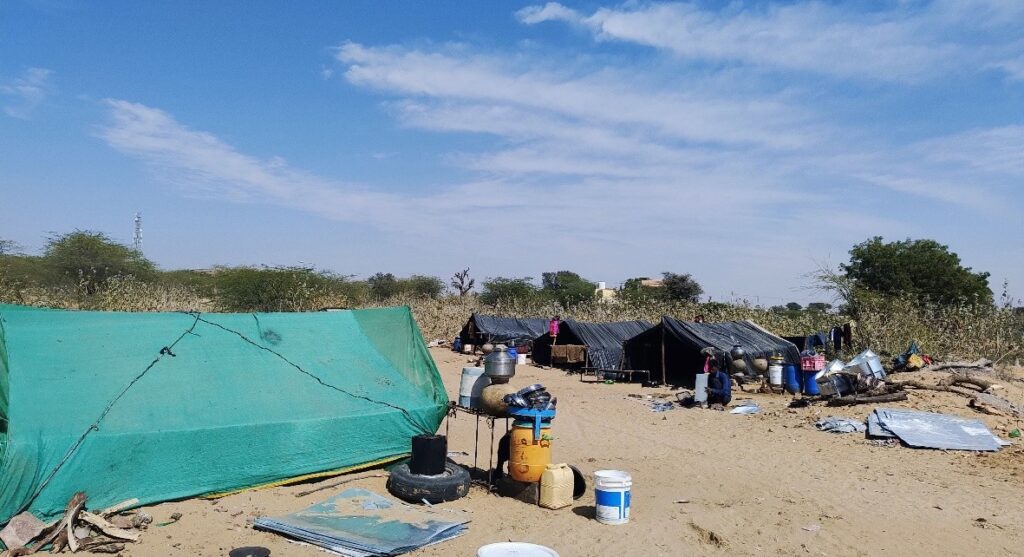
As one elder from the Lohar community expressed,
“Humare liye sheher toh wahi talab ke paas tha, jahan mela lagta tha.”
English translation: For us, the city was the pondside where the fair took place.
Dhani and dera (temporary settlements) illustrate a conception of space that is relational and seasonal, rather than static. For these families, the “region” consists of areas where water is accessible, animals can graze, and kinship ties facilitate mobility, often spanning distances of 20 to 50 kilometres.
Caste, Commons, and Belonging
For Jogi communities, who are classified as Other Backwards Class (OBC) in Rajasthan, but are known for their semi-nomadic lifestyle and roles as religious singers, and seasonal labourers, living on the margins of settlements and navigating multiple identities, the concept of “go char bhumi” (community grazing land) holds significant political implications. While government records officially classify these areas as commons, access is often determined by local power dynamics, with panchayats frequently dominated by members of dominant caste groups.
One Jogi woman, who participates in a Village Older People’s Association (VOPA), a community-based platform supported by a local NGO like GRAVIS (Gramin Vikas Vigyan Samiti) to amplify the voices of elders in village decision-making, voiced her frustration:
“Hum panchayat se bolte hai, par sunte nahi. Gaav ke gochar par hamara janwar nahi ja sakta.”
English Translation: We speak to the panchayat, but they don’t listen. Our livestock cannot access the village commons.
Thus, for marginalised groups like the Jogis, the notion of “region” embodies a dual reality: it serves both as a site for adaptation and resource negotiation and as a landscape marked by persistent structural inequalities rooted in caste hierarchies.
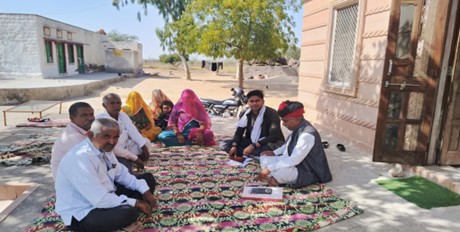
The exclusion from commons and their marginal position within village power structures not only shape the everyday survival strategies of the Jogis but also influence their mobility patterns, seasonal migrations, and the ways they maintain multi-sited connections across the Thar Desert.
Migration, Memory, and Multi-sited Belonging
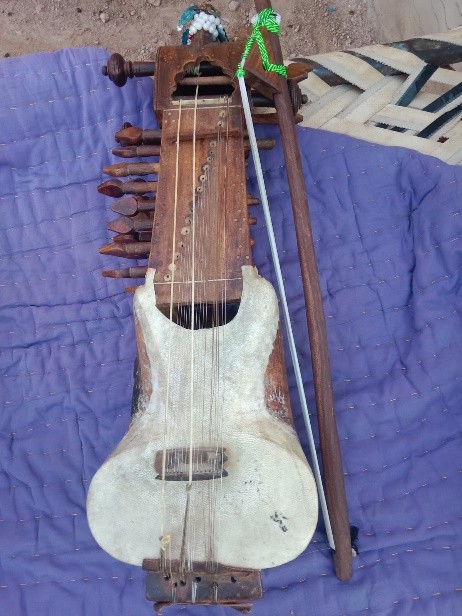
Similarly, many families from the Langa and Manganiyar communities, renowned for their rich musical traditions, engage in seasonal migration between Jaisalmer, Barmer, and Sindh (Pakistan). Despite the passage of decades since borders were established, their musical geography continues to trace connections through stories, shrines, and audiences rather than through passports.
As one elder remarked,
“Gaana toh shetra ko jodne ka kaam karta hai.”
English Translation: Our songs connect regions.
This oral geography challenges the state’s conception of the region and demonstrates how trans-local identity is deeply rooted in culture rather than in cartography.
The Importance of Vernacular Regions for Development
However, policy often defines regions using metrics such as GDP, rainfall, and resource zones; these quantitative classifications often overlook how communities like the Jogis, Bhils, and Lohars perceive their identity through factors such as belonging, exclusion, land, caste, and kinship (Ibrahim, 2024; Acharya, 2021).
Development interventions that fail to recognise these lived regional logics may inadvertently worsen existing vulnerabilities. For instance:
- A solar park might seem to “develop” the area, but could effectively destroy vital pastoral commons.
- A drinking water pipeline might bypass Dhanis simply because they are not represented on official maps.
To effectively address regional inequalities, it is crucial to regard vernacular geographies as more than mere romanticised remnants of history. They should be recognised as vibrant, living spatial practices that play a significant role in shaping survival and adaptation.
Conclusion: Listening to the Margins
From dhani to dera, and from gochar to gaon (Village), marginalised communities in the Thar engage with and redefine their regions every day. Their sense of regional identity is not defined by bureaucratic measures; it is deeply felt, remembered, negotiated, and lived.
As regional studies increasingly aim to decolonise their frameworks, it is crucial to ask: Whose regions are we studying? Who determines these definitions, and whose voices remain unheard? By centring vernacular spatial concepts and the perspectives of marginalised voices, we not only deepen our understanding of regions in South Asia but also create opportunities for more equitable, place-based development.
Acknowledgement:
I would like to express my sincere gratitude to my mentors, Dr Saloni Bhatia and Dr Satya Prakash Mehra, for their invaluable guidance and support. I am also thankful to GRAVIS, particularly Dr Prakash Tyagi and Dr Leena Chauhan, for accommodating my research and facilitating my fieldwork. A special thanks goes to the GRAVIS field team and community members whose cooperation made this work possible.
Connect with the Author

Harsh Singhal is currently a Researcher at the Bombay Natural History Society (BNHS) in India. His work encompasses community-led conservation, climate adaptation, and ecological governance within arid ecosystems. Recently, he has focused on exploring vernacular institutions and traditional knowledge systems in western Rajasthan.
 : Harsh Singhal
 :
: