Creative Cultural Economy and Reflections on Thirty Years
In 1996, the internet hummed into homes through dial-up connections, independent retail and alternative culture were already visible across Brighton, and changing technologies were beginning to reshape everyday life and work. Looking back over the past three decades offers an opportunity to reflect on the different developments that have taken place across Brighton and Sussex and on some of the activities and traditions that have remained visible over time.One example can be seen in fashion. Brighton’s reputation for vintage and second-hand retail has long been associated with independent shopping culture and alternative subcultures. During the 1990s, practices of reuse, remixing, and do-it-yourself style formed visible parts of everyday fashion before sustainability became a more widely discussed issue. Today, the city continues to be associated with independent and vintage retail, which emerged within Brighton’s wider creative environment and circular economy principles, and has even been featured in Vogue as one of the most appealing vintage shopping destinations.
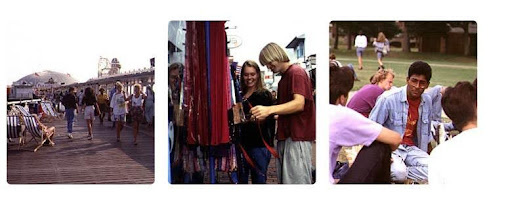
Cultural activities form another part of this reflection. Creative industry rankings and regional reports consistently place Brighton and Hove among the UK’s leading creative cities, citing its high concentration of galleries, theatres, and festivals relative to its size. From the mid-1990s, Brighton already had an established music scene, nightlife, and an expanding events culture. Brighton Festival provided a platform for performance and visual arts, while Brighton Fringe later opened opportunities for independent performers and artists, furthering the local government’s strategies and producing employment in the creative industries in the Brighton and Sussex regions.
Technological developments also formed part of wider changes across the area. During the mid-1990s, internet access remained limited across much of the UK. Later developments in web design, digital media, and online services coincided with the presence of freelancers, designers, and digital businesses in Brighton. Today, Brighton is frequently described as “Silicon Beach,” reflecting the city’s concentration of digital agencies and technology businesses.
Universities and organizations also contributed to broader developments in teaching and research across areas, including computer science, design, engineering, and business. For example, the University of Sussex and the University of Brighton steadied the pipeline of graduates, research activity, and industry collaboration. Sussex Innovation, which opened in 1996, provided support for entrepreneurship and business activity and formed part of a broader period of change linked to research, enterprise, and innovation.
This continuity is also visible in cultural life across the city. Events and traditions such as Brighton Pride, classic car gatherings, Mod and scooter meet-ups, and seafront gigs continue to shape the calendar, while Burning the Clocks remains a distinctive example of community-led public art. Brighton Pride, which moved to Preston Park in 1996 after re-emerging in the early 1990s during protests against Section 28, has since grown into one of the UK’s largest LGBTQ+ celebrations.
Across these examples, Brighton and Sussex appear shaped not only by change but also by forms of continuity visible across different periods. Looking back at the developments visible since 1996 offers more than a historical reflection. Across Brighton and Sussex, changes in cultural activities, institutions, technology, and economic life can be observed across different periods. Looking back also highlights how new activities and developments often emerge alongside longer-standing practices and traditions that remain visible across the region rather than entirely replacing them, suggesting a culture of experimentation and openness to change.
As emerging technologies such as artificial intelligence, immersive media, and green manufacturing continue to reshape industries, Sussex is well-positioned to keep adapting. If the past three decades are any indication, the ideas that feel niche or experimental today may become the defining features of the region’s economy in the decades to come.
Regional Studies Association is based at Sussex Innovation, part of the University of Sussex. Founded in 1996, Sussex Innovation has spent three decades helping bridge the gap between creativity and commerce across the Brighton and Sussex area, helping influence the economic development of the region. We are delighted to share their reflective piece on how the area has grown into a recognized center for sustainable fashion and digital enterprise, and what that history might tell us about the decades ahead.