Regional Governance, Policies and Institutional Change
This report reflects on my experience attending the Regional Studies Association (RSA) 2026 Annual Conference, held in Gothenburg, Sweden, from 15 to 18 June. The conference provided an opportunity for academics, policymakers and researchers to share research and perspectives on regional development, planning and spatial change, organised around the theme of regional governance, policies and institutional change.
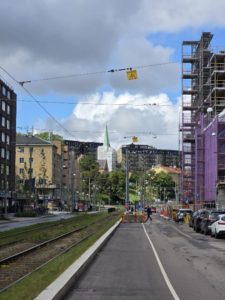
Gothenburg provided an appropriate setting for exploring these topics. The city’s development has been closely shaped by its position along the Göta älv river and its historical role in trade, shipping and shipbuilding. As these economic activities declined, the city and its institutions adapted, with former industrial areas being repurposed for new economic and social functions. A tour of Norra Älvstranden, the former shipyard district on the northern banks of the river, illustrated this transformation and provided a valuable place-based example of how changing economic circumstances can drive changes in land use, infrastructure and governance.
The opening plenary, Regions as Arenas in a Changing World: Rethinking Spatial Theories, explored whether new theoretical approaches are needed to understand the challenges facing regions today. My overarching takeaway was the significance of developing new ways of observing, interpreting and responding to regional challenges in order to enable different outcomes. This connected closely with Markku Sotarauta’s lecture, in which he encouraged researchers to approach their work from novel perspectives and to draw on their wider interests and experiences. His reflections on how reading literature from different cultures had influenced his own thinking provided a useful reminder of the value of intellectual curiosity and interdisciplinary lenses in regional research and innovation.
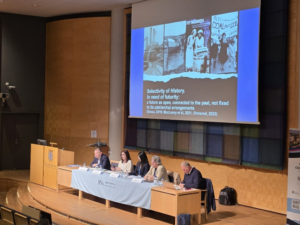
The second day’s opening plenary, Long Shadows of History: Can Regions Escape Their Past?, considered how historical legacies continue to shape regional development. Using industrial histories from Scandinavia and the UK, speakers examined the tension between the legacies of the past and possibilities for the future, and questioned how effectively policy can influence established patterns of development. Emma Ormerod’s contribution was particularly valuable. She highlighted the importance of examining power within regional development, including gender inequalities, and of incorporating perspectives that are frequently overlooked or sidelined.
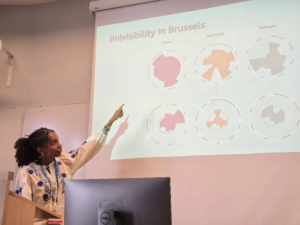
These themes connected closely with the session in which I presented, Left-Behindness and Poverty. I had the opportunity to debut research conducted with my co-authors, Julia Korpacka and Matthijs Koch, (In)visibility in the City: Towards a Time- and Space-Sensitive Intersectionality Approach for Addressing Inequality in Policymaking and Different Spatial Domains within Cities. Presenting this research in the session prompted me to reflect on the position of intersectionality within regional studies and development. It is often siloed into more niche discussions of diversity and inclusion, despite its relevance to many questions at the heart of our field. Understanding how inequalities are produced, experienced and reproduced across places, populations and institutions is integral to regional development, governance and policymaking. Intersectionality can therefore be viewed not as a distinct area separate from these wider debates, but as an analytical approach that can inform and/or underpin them.
Beyond these core sessions, I attended presentations across a range of related topics. In Data-Driven Policymaking: Integrating Data, Policy and Place, Benjamin Klement presented work on digital twins using Saxony, Germany, as a case study. I found this particularly relevant to COMMIT, an Interreg Europe project in which I am currently involved, which works with regional authorities to support small and medium-sized enterprises’ access to finance, skills, innovation and knowledge as they navigate the low-carbon transition. Several regions involved in COMMIT experience fragmented support systems, and the application of digital twins could potentially help consolidate information and opportunities while reducing some of the administrative fatigue faced by businesses.
Other sessions broadened my understanding of how regional policy interacts with everyday experiences of place. Aleksandra Krstikj’s presentation, Walking to School: Place-Based Evidence on Children’s Mobility and Urban Inequality in Latin America, highlighted the importance of integrating walking and everyday mobility into transport infrastructure planning. Henry Wai-chung Yeung’s lecture, Uneven Regional Development in a Contentious World of Changing Global Production Networks, also provided an encouraging perspective for early-career researchers, emphasising the continuing need for research into the increasingly complex relationships shaping world regions.
A recurring theme throughout the conference was the importance of understanding regional systems as interconnected structures rather than focusing only on their individual components. This means considering not only institutions, policies and economic structures, but also the people within these systems and the relationships between them. For uUnderstanding these relationships is essential for identifying where and how change can take place.
Sessions Attended
Day 1
- Regions as Arenas in a Changing World: Rethinking Spatial Theories
- Left-Behindness and Poverty
- AI and Big Data in Regional Studies 2
Day 2
- Long Shadows of History: Can Regions Escape Their Past?
- Data-Driven Policymaking: Integrating Data, Policy and Place
- Regional Studies, Regional Science Journal Lecture: Seeing the Unseen in Regional Studies: A Framework for Identifying Emerging Research Frontiers
- Regional Governance, Policies and Institutional Change 3: Neighbourhood Dynamics
- Networking Session (Speed Dating)
Day 3
- Regional Development in the Global South 5: Policies, Paradoxes, Perspectives
- Global Value Chains and International Business 4: Industrial Policies
- Regional Studies Annual Lecture: Broadening Regional Horizons: Regional Studies, Policy and Development in an Age of Uncertainty
About the author
Rebecca’s background brings together urban planning, systems thinking and transition research, deliberately working across scales from participatory community design to regional policy research. This experience is grounded in a Bachelor of Science in Architecture and a Master of Science in Urbanism from Delft University of Technology and deepened through her current role as a Research Assistant at the European Policies Research Centre (EPRC).
See what Rebecca has to say about her experience at the 2026 RSA Annual Conference