Planners and researchers must “change the demand” for research to meet the polycrisis, RTPI–RSA roundtable concludes
WPEC26, Helsinki, July 2026:
The Royal Town Planning Institute (RTPI) and the Regional Studies Association (RSA) brought together academics, practitioners and policymakers in Helsinki this week for a joint roundtable on closing the persistent gaps between planning research, policy and practice, and issued a call for researchers and policymakers alike to help take the agenda forward.
The ” research–policy and theory–practice “gaps are perennial concerns in planning. Efforts to close them have typically focused on the supply side: incentivising researchers to produce the work policymakers say they want. In that framing, much critical, theoretical or experimental scholarship is dismissed as esoteric or impractical.
The roundtable asked a different question: should more emphasis be placed on shaping research demand? Could institutions work with planners and policymakers to develop their “antennae”, a sensibility for the value of critical and unconventional research, and shift the conversation from what policymakers say they want to what they actually need? In an era of global polycrises, the organisers identified different perspectives needed to break path dependencies, with the research community having a sustained role to play in providing them.
The discussion: Panellists spoke from four very different institutional settings, and several common themes emerged.
Translation, language and tone. Dr Michael Glass (University of Pittsburgh) described how his RSA-funded comparative research on improving inclusion in innovation districts spanning Pittsburgh, Newcastle, Belfast and Medellín succeeded because it was designed to engage directly with policymakers and to be understood quickly by non-specialists. Practitioners told his team that if research could not be digested, it would not be taken up.
Jurgen Attard (Gozo Regional Development Authority) added that reaching policymakers is less about changing your language than changing your tone: lead with the benefits for people and places, not the model behind the findings.
Béatrice Crabb (RTPI) described how RTPI reports are used to bring new evidence to the attention of policymakers, shaping policy demand through calls for new action.
Dr Stefania Fiorentino (University of Cambridge) showed how translation begins in the classroom. Her Urban Regeneration and Regional Transformation module, co-designed and delivered in partnership with local policymakers and planning practitioners, provides space for students to break down complex real-world problems through direct dialogue, using Cambridge’s growth challenge as a live case, and demonstrates that negotiated, imperfect solutions are often good outcomes.
Misaligned incentives and time horizons. Panellists contrasted academic reward structures built around peer-reviewed publication, promotion and semester rhythms with the fast, unforgiving timescales of policy and practice. Dr Glass noted that Pittsburgh now formally rewards community-engaged work in promotion decisions, but that this remains rare across academic institutions, and that professional bodies like the RTPI and RSA can help make the case for such reforms.
Trust and neutral spaces. Every contribution touched on trust. Speakers described the importance of showing up consistently, beyond the life of any single grant, and the value of “liminal” or neutral spaces where dialogue can happen: the University of Pittsburgh’s community engagement centres that involve community-led oversight; knowledge-brokering units such as Insights North East (based at Newcastle University); and Dr Stefania Fiorentino’s forthcoming Changing Cities exhibition and Changing Cambridge workshops, designed as an apolitical setting where planners, national agencies and communities can discuss the region’s 150,000-home growth challenge. Marcus Atkinson (RSA) described the bridging role of learned societies as acting as a “shock absorber” between research, policy and practice, and outlined RSA grant schemes that fund research only where policy or community organisations are direct beneficiaries.
Evidence that changes decisions. Jurgen Attard showed what demand-side change looks like in practice. Gozo’s regional development strategy now sets a stable, government-adopted research agenda that outlasts ministerial churn; a jointly produced business sentiment survey has given the region a single evidence-based voice; and a regional impact assessment, the first of its kind in Malta, convinced government to reverse a stamp duty cut that was generating harmful externalities.
Setting the agenda internationally. Béatrice Crabb described how the Institute’s research on future-proofing new towns brought a fresh, internationally comparative perspective to the UK debate and fed into global discussions at the World Urban Forum, showing how gently reframing a live policy question can shift demand at the highest level.
Some of the practice suggestions to develop the work:
Appoint a champion. Give a named individual responsibility for driving research–practice engagement, “if nobody’s responsible for it, it’s not going to happen.”
Change the tone, not just the language. Support researchers to develop the skills to communicate with policymakers, practitioners and communities.
Think long term. Set agendas around the long-term wellbeing of communities rather than reacting to short-term pressures.
Match-make proactively. Identify the areas where policymakers need support and connect them to relevant researchers, rather than leaving academics to coax policymakers into collaboration.
Get involved
The RTPI and RSA are keen to hear from academics who want to develop the skills to engage with policy and practice and to test the “demand” framing in their own work and from policymakers and practitioners who want to strengthen their organisations’ use of critical research and help shape the research agenda. Opportunities include RSA policy impact grants and expo activities, RTPI research and international networks, and follow-up events building on this roundtable.
Panel (from left to right): Dr Michael Glass (University of Pittsburgh / RSA); Dr Daniel Slade MCD MRTPI (Chair, RTPI); Dr Stefania Fiorentino (University of Cambridge / RSA); Béatrice Crabb (RTPI; Jurgen Attard (Gozo Regional Development Authority / RSA).
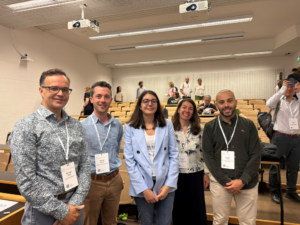
The roundtable, “Reframing the theory–practice and research–policy gaps in the time of polycrises,” was held in Helsinki in July 2026, jointly organised by the Royal Town Planning Institute and the Regional Studies Association.
About the Regional Studies Association
The Regional Studies Association (RSA) is an international, interdisciplinary learned society dedicated to regional research, development and policy. It supports researchers in the field and disseminates their work across its six academic journals, book series and policy impact publications, connecting evidence to policy and practice. The RSA’s vision is for regional development policies to be shaped by robust research, for the benefit of people and places across the world.
Improving Inclusive Innovation Outcomes, the RSA-funded Policy Impact book discussed at the session, is available online.
About the Royal Town Planning Institute
The RTPI is the largest professional body for town planners in the UK and Europe, representing around 27,000 members in over 80 countries. The Institute has been shaping planning policy and raising professional standards for over 100 years and is the only body in the UK to confer Chartered status to planners, the highest professional qualification. Contact the RTPI press office on 020 7929 8330 or news@rtpi.org.uk. For more information, visit www.rtpi.org.uk.